
Pruning
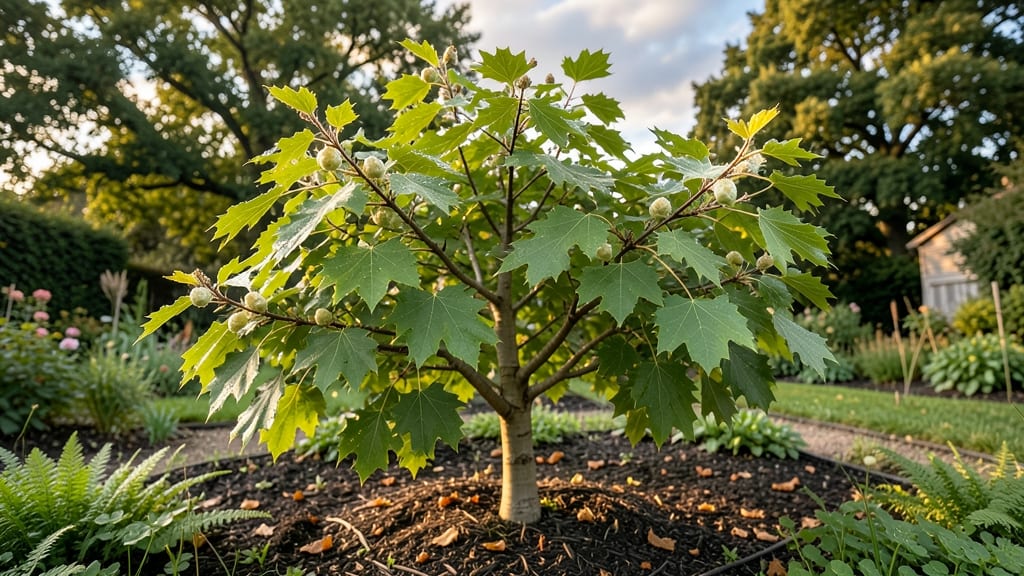
Those unsightly bladder galls on your maple tree aren’t just an eyesore—they’re a sign of tiny gall wasps doing their damage. 🌳 I’ve seen these round, balloon-like growths pop up every spring, and while they look alarming, they’re usually harmless to the tree’s long-term health.
The key is knowing how to manage them without harming your maple or the environment.
These galls form when Andricus gall wasps lay eggs in the tree’s twigs, triggering the plant to grow protective pouches around them. The result? Clusters of smooth, translucent bladders that can look like something out of a sci-fi movie.
While they don’t drain the tree’s strength, heavy infestations can weaken branches over time—especially if they’re left unchecked for years.
The good news? You can prune them out in late winter or early spring before the wasps emerge. Just snip the infected branches 6-12 inches below the galls, sterilize your tools, and dispose of the clippings.
For severe cases, a horticultural oil spray in late fall or early spring suffocates overwintering larvae without harming the tree.
Healthy trees resist galls better, so focus on watering deeply during droughts, mulching to retain moisture, and avoiding over-fertilizing. A strong maple is less appealing to gall wasps—and that’s the real secret to keeping your tree thriving.
The Tiny Bugs Behind Big Bumps
If you’ve noticed those odd, balloon-like swellings on your maple tree’s branches—known as bladder galls—you’re not alone. These peculiar growths aren’t just a quirky part of nature; they’re the result of a fascinating (and sometimes frustrating) interaction between insects and trees.
Let’s break down the science behind why these galls form and who’s really calling the shots.
Bladder galls on maple trees are almost always the handiwork of tiny wasps in the family Cynipidae, specifically the Andricus genus. These wasps have a unique reproductive strategy: instead of laying eggs directly on leaves or bark, they inject their eggs into young maple buds or stems.
The tree’s immune system reacts to these eggs as an invasion, prompting it to grow a protective, fluid-filled gall around the intruder. Think of it like a plant’s version of an abscess—nature’s way of isolating a threat.
Why it happens:
- Chemical signals: The wasp’s saliva contains proteins that trigger the tree’s cells to divide rapidly, forming the gall’s walls. This is a classic example of induced plant structures, where the tree’s own biology is hijacked.
- Timing is everything: Wasps time their attacks to coincide with the tree’s most vulnerable growth phases—spring buds or new shoots—when defenses are down and nutrients are flowing.
- Gall as a nursery: The developing larvae feed on the gall’s inner tissues, which the tree produces as a food source. It’s a cozy, pre-packaged meal plan for the wasp’s offspring.
💡 Pro Tip: Galls are most common on silver maples (Acer saccharinum) and red maples (Acer rubrum), but they can appear on other species. If you spot them early, the wasps haven’t yet laid eggs—so timing matters for management!
While wasps are the primary culprits, the health of your maple tree plays a surprising role in how severe the gall infestation becomes. Stressed trees are more susceptible to these attacks because their weakened immune responses can’t fend off the wasps as effectively. Common stressors include:
| Stressor | How It Helps Galls Form |
|---|---|
| Drought | Reduced water availability weakens the tree’s ability to produce defensive compounds, making it easier for wasps to penetrate buds. |
| Poor Soil Nutrition | Deficiencies in nitrogen, phosphorus, or potassium impair the tree’s growth vigor, leaving it more prone to gall formation. |
| Competition | Overcrowded roots or nearby aggressive plants (like black walnut) steal nutrients, stressing the maple and making it a softer target. |
| Physical Damage | Broken branches or wounds create entry points for wasps and disrupt the tree’s natural defenses. |
Why it happens: A healthy tree can often compartmentalize the gall, limiting its size and spread. But when stressed, the tree may overproduce galls as a desperate attempt to protect itself—or worse, fail to contain the infestation entirely.
🌡️ Pro Tip: If your maple is already struggling, focus on reducing stress first. Deep watering, mulching, and a soil test can make a huge difference in limiting gall severity before the wasps even arrive.
Bladder galls don’t appear randomly—they thrive under specific environmental conditions that favor both the wasps and the tree’s reaction. Here’s what makes your maple tree a prime target:
- Warm, moist springs: Wasps are most active during mild, damp weather (50–70°F), which coincides with maple bud break. This double whammy creates the perfect storm for gall formation.
- Sun exposure: Galls are more common on branches that receive direct sunlight, as these areas tend to have faster-growing, more nutrient-rich tissues that wasps prefer.
- Urban vs. wild trees: Trees in urban settings (with compacted soil, pollution, or limited root space) often suffer more severe infestations due to chronic stress.
Why it happens: The combination of wasps’ biological clocks and the tree’s seasonal growth patterns creates a predictable cycle. In years with early springs or unusually warm winters, gall outbreaks can be 2–3 times worse than average.
✨ Pro Tip: If you’re in a region with unpredictable weather (like sudden heatwaves in early spring), monitor your tree closely. Early intervention can prevent galls from becoming a full-blown problem.
Fixing Maple Tree Bladder Galls Naturally
Bladder galls on maple trees can be unsightly, but with the right approach, you can manage—and even prevent—them without harsh chemicals. Below are practical, step-by-step solutions tailored to the root causes of these pesky growths, from pruning to cultural fixes. Let’s restore your tree’s health the natural way!
Cause: Early-stage galls or minor infestations (e.g., from Colopha scale insects or fungal activity). Fix: Start with selective pruning to remove affected branches while preserving the tree’s structure.
- 🔪 Identify and Cut Infested Branches
- Use clean, sharp pruners (sterilized with rubbing alcohol) to snip off galls and small branches where they cluster.
- Cut 6–12 inches below the gall to ensure you remove hidden pests or spores.
- Pro Tip: 💡 Bag and dispose of pruned material in sealed trash to prevent reinfestation.
- 🌞 Boost Air Circulation
- Thin out dense foliage to improve airflow—this reduces humidity, which fungi and insects love.
- Focus on opening the canopy by removing crossing or overcrowded branches.
- 🌱 Apply Organic Fungicides (If Needed)
- Spray with neem oil or copper fungicide (like Copper Soap) during dormant season (late fall/early spring) to deter fungal spores.
- Warning: Avoid spraying when bees are active (early mornings or overcast days).
- 👀 Monitor for Regrowth
- Check the tree monthly for new galls. If they persist, escalate to stronger measures below.
Cause: Heavy infestations, large galls, or recurring outbreaks despite mild treatments.
- ⏰ Time Your Pruning Right
- Best time to prune: Late winter or early spring (when the tree is dormant but pests are inactive).
- Avoid pruning in fall—this can stress the tree and invite more pests.
- 🌳 Structural Pruning for Long-Term Health - Remove large branches with galls (if >25% of the branch is affected).
Use the three-cut method for safety: - First cut: Make an undercut 18–24" from the trunk. - Second cut: Cut through the branch 2–3" above the undercut. - Third cut: Remove the stub by cutting just outside the branch collar. - Pro Tip: ✨ If galls are near the trunk, consult an arborist to avoid damaging the tree’s vascular system.
- 🐞 Target Pests with Natural Predators
- Introduce beneficial insects like ladybugs or lacewings, which prey on scale insects.
- Apply kaolin clay (a non-toxic mineral spray) to create a barrier that confuses and repels pests.
- 🌿 Soil and Tree Health Boost
- Fertilize with compost or organic slow-release fertilizer (like fish emulsion) to strengthen the tree’s defenses.
- Water deeply but avoid overwatering—soggy soil invites fungal growth.
Once you’ve tackled the problem, proactive care is key to preventing a comeback.
| Prevention Step | How to Do It | When to Do It |
|---|---|---|
| 🌳 Regular Inspections | Check the tree twice a year (spring and fall) for early signs of galls. | March & October |
| 🍂 Clean Up Debris | Remove fallen leaves and galls from the base of the tree. | Fall (after leaf drop) |
| 🌧️ Improve Drainage | Ensure the tree isn’t sitting in standing water; amend soil with compost. | Spring (before new growth) |
| 🐝 Support Pollinators | Plant native flowers near the tree to attract predator insects. | Spring/Summer |
| 🪓 Prune Properly | Remove dead or weak branches annually to reduce stress and pest entry points. | Late winter/early spring |
If bladder galls:
- Cover large sections of the tree (50%+ of branches).
- Appear year after year despite treatments.
- Are accompanied by leaf drop, oozing sap, or dieback.
A professional can assess whether the tree needs systemic treatments (like soil drenches) or structural support to recover.
Final Thought: Bladder galls may seem stubborn, but with patient pruning, natural pest control, and tree health focus, your maple can bounce back stronger. Start with the mildest fix, monitor progress, and adjust as needed—your tree will thank you with lush, gall-free foliage! 🌿💚
Frequently asked questions
Are bladder galls harmful to my maple tree?
While they look alarming, bladder galls are usually not fatal to healthy maple trees. The real concern comes from heavy infestations that can weaken branches over time. Focus on removing large clusters and improving tree health to minimize long-term damage.
When is the best time to prune off bladder galls?
Late winter or early spring is ideal—before the wasps emerge but after the tree is dormant. Avoid pruning in fall, as it can stress the tree and attract more pests. Always sterilize your tools to prevent spreading infections!
Will removing galls kill the wasps inside?
Yes! When you prune out galls, you’re also removing the developing wasp larvae. For best results, dispose of pruned material in sealed bags—don’t compost it, as wasps may emerge later. Early removal prevents the next generation from forming new galls.
Can I use chemical sprays to treat bladder galls?
Chemicals like horticultural oil or insecticidal soap can help in severe cases, but they should be used sparingly. Apply them in late fall or early spring to target overwintering larvae. Avoid harsh pesticides—they can harm beneficial insects and the tree itself.
Why do some maple trees get galls while others don’t?
Healthy, well-nourished trees resist galls better. Stressed trees (due to drought, poor soil, or competition) are more vulnerable. Focus on deep watering, mulching, and avoiding over-fertilizing to strengthen your tree’s natural defenses.