
Pests
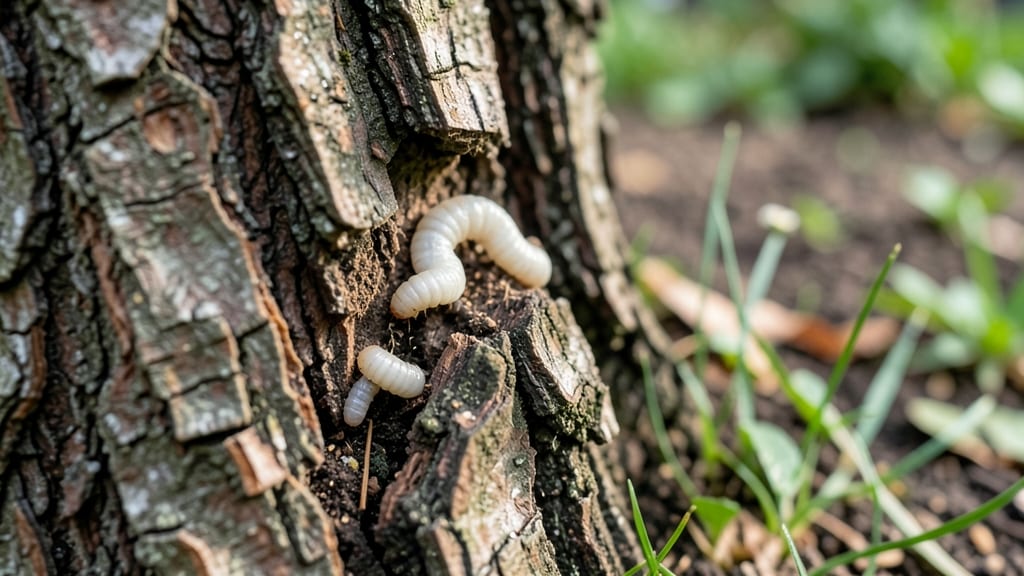
Finding little white worms in tree bark means your tree is hosting wood-boring larvae—and these critters can turn a healthy trunk into a hollowed-out mess over time. 🌳 I’ve seen them chew through fruit trees, oaks, and even pines, leaving behind sawdust-like frass and weakened wood that cracks under stress.
The good news? You can stop them before they do serious damage.
These worms are usually the larvae of beetles like the emerald ash borer or pine bark beetle, sneaking in through cracks or wounds. If you spot them early, you can prune infested branches, seal entry points with pruning sealant, or apply neem oil to suffocate them.
The key is acting fast—once they’re deep in the bark, the tree’s already fighting a losing battle.
By mid-summer, you’ll see fewer signs of fresh damage if you’ve removed the worst infestations. Healthy trees with strong bark resist attacks better, so focus on watering deeply during droughts and avoiding girdling wounds from lawnmowers or string trimmers.
A quick inspection every spring and fall keeps these pests from becoming a full-blown crisis.
For stubborn cases, consider inviting woodpeckers to your yard—they love feasting on these larvae and won’t cost a dime. Just avoid pesticides, which can harm pollinators and often fail to reach the worms hiding deep in the bark. Prevention is the real win here.
The Hidden Invaders Behind Bark
Those tiny, wriggling white worms you’ve spotted in tree bark aren’t just random visitors—they’re often the larvae of larger pests, each with its own triggers and behaviors. Understanding why they appear helps you address the root cause before damage spreads. Let’s break down the most common culprits and their motivations.
Tree bark isn’t just a home—it’s a food source for many larval pests, and moisture turns it into an all-you-can-eat buffet. When bark stays damp for extended periods, it creates the ideal environment for eggs to hatch and larvae to thrive. Here’s how it happens:
- Rain or Overwatering: Excessive moisture softens bark, making it easier for adult pests (like bark beetles or sawflies) to lay eggs. Once hatched, larvae burrow in, feeding on the moist, nutrient-rich layers beneath.
- Poor Drainage: Compacted soil or roots struggling to absorb water can leave bark perpetually damp. This is especially true for trees planted in heavy clay or containers without drainage holes.
- Fungal Growth: Mold or fungal infections (often caused by moisture) weaken bark, creating entry points for pests. Some larvae, like those of the Sirex woodwasp, actually require fungal partners to survive.
💡 Pro Tip: Check for soggy bark or mushrooms at the tree’s base—these are red flags. Improve drainage by mulching away from the trunk (not against it) and ensuring the root zone isn’t waterlogged.
Stressed or injured trees emit chemical signals that attract egg-laying adults. Think of it like a neon “OPEN” sign for pests. Common stressors include:
| Stressor | How It Helps Pests |
|---|---|
| Drought | Dry conditions weaken a tree’s defenses, making it easier for pests like bark beetles to bore in and lay eggs. |
| Nutrient Deficiency | Malnourished trees produce thinner bark, which larvae can penetrate more easily. Look for yellowing leaves or stunted growth. |
| Physical Damage | Cracks, splits, or wounds (from storms, tools, or animals) create direct entry points for pests to deposit eggs. |
| Disease | Infected trees (e.g., oak wilt or Dutch elm disease) often attract pests as secondary invaders, exacerbating the problem. |
🌡️ Actionable Fix: Strengthen your tree’s resilience by:
- Watering deeply but infrequently (1–2 inches per week) to avoid drought stress.
- Fertilizing in early spring with a balanced, slow-release formula (test soil first!).
- Sealing fresh wounds with pruning sealant (for cuts > ½ inch) to block entry.
Most larval pests have a specific window for reproducing, often tied to temperature and humidity. Here’s when they strike:
- Spring (April–June): The most active period for egg-laying. Warmer temperatures trigger adults (like woodboring beetles) to emerge and seek out fresh bark to infest.
- Fall (September–October): Some pests, such as sawfly larvae, time their life cycles to coincide with falling leaves and cooler weather, which slows tree defenses.
- Year-Round in Warm Climates: In regions without freezing winters (e.g., Florida, California), larvae may develop continuously, leading to perennial infestations.
⏰ Prevention Strategy: Monitor your trees during these peak seasons. If you spot adults (e.g., tiny beetles or wasps) crawling on bark, act fast—their eggs hatch in days.
By addressing moisture, tree health, and seasonal risks, you can disrupt the life cycle of these pests before they turn your tree into a larval hotel. Next up: How to Tell Who’s Really Behind the Infestation.
Natural Ways to Remove Tree Pests
Discovering tiny white worms in your tree bark can be alarming, but the good news is that most infestations can be managed naturally without harsh chemicals. The key is identifying the cause and applying the right treatment.
Below, we’ll break down practical, step-by-step solutions tailored to common culprits—from wood-boring larvae to bark-eating caterpillars—along with prevention tips to keep your trees healthy long-term.
Not all white worms in tree bark are the same, so your approach should match the pest. Here’s how to tackle the most likely offenders:
🐛 Wood-Boring Larvae (e.g., Woodworms, Beetle Grubs)
👨🍳 Signs: Small holes in bark, sawdust-like frass, weakened wood structure.
- 🔪 Prune and Remove Infested Branches
- Use sterilized pruning shears to cut away heavily damaged branches (at least 6 inches beyond visible holes).
- Burn or bag the debris (do not compost) to prevent larvae from spreading.
- 💦 Apply Beneficial Nematodes - These microscopic worms (Steinernema carpocapsae) attack larvae without harming plants. - How to use: Mix with water and spray onto bark crevices or soil at the tree’s base.
Reapply every 4–6 weeks during active seasons (spring/fall). - Pro tip: 💡 Water the tree 24 hours before and after application for best results.
- 🌡️ Heat Treatment (For Severe Cases) - Use a propane torch to carefully heat infested areas (hold ~6 inches away for 30–60 seconds).
This kills larvae but must be done early in the day to avoid fire hazards. - Safety first:* 🔥 Keep a fire extinguisher nearby and avoid windy days.
- 🛡️ Seal Entry Points
- Once larvae are gone, fill holes with a mix of beeswax and turpentine (or commercial wood filler) to deter future beetles.
🐛 Bark-Eating Caterpillars (e.g., Gypsy Moth, Tent Caterpillars)
👨🍳 Signs: Silken tents, chewed leaves, white worm-like larvae clinging to bark.
- 🍳 Handpick and Destroy Larvae
- Wear gloves and remove caterpillars by hand, dropping them into soapy water (1 tbsp dish soap per gallon).
- Check for egg masses (small white clusters) in bark crevices and scrape them off into a sealed bag.
- 🌿 Use Horticultural Oil or Neem Oil
- Spray a 1–2% horticultural oil solution (or neem oil mixed with water) directly onto bark and foliage.
- Best time: Early morning or late evening to avoid burning leaves.
- Pro tip:* 🌡️ Reapply every 7–10 days until larvae pupate.
- 🕷️ Introduce Natural Predators
- Birds (like chickadees) and parasitic wasps eat caterpillar eggs/larvae. Install birdhouses or wasp nests nearby to encourage them.
- Ladybugs can also help—purchase them from garden centers.
- 🚫 Remove Webbing and Tents
- Gently pry apart silken tents with a stick and burn or bury them (do not compost).
🐛 Scale Insects or Mealybugs (Sap-Sucking Pests)
👨🍳 Signs: White cottony clusters, sticky residue (honeydew), yellowing leaves.*
- 🧼 Blast Off with Water
- Use a strong hose spray to dislodge pests from bark crevices. Repeat every 3–4 days for 2 weeks.
- 🍋 Homemade Spray Recipe
- Mix 1 tbsp rubbing alcohol + 1 tsp dish soap + 1 quart water in a spray bottle.
- Shake well and spray directly onto infested areas. Reapply weekly.
- 🐝 Encourage Antagonistic Insects
- Lacewings and lacewing larvae devour scale insects. Release them near the tree or plant dill or fennel to attract them.
- 🪴 Prune for Airflow
- Thin out dense foliage to reduce humidity, which scale insects love. This also makes sprays more effective.
Once you’ve tackled the infestation, proactive care is your best defense:
- 🌱 Strengthen Tree Health:
- Water deeply during droughts (but avoid overwatering).
- Mulch with wood chips (2–3 inches thick) to retain moisture and deter pests.
- Fertilize in early spring with balanced, slow-release fertilizer (e.g., 10-10-10).
- 🔍 Regular Inspections:
- Check bark and foliage monthly during growing seasons for early signs of infestation.
- Look for sawdust piles, new holes, or unusual webbing.
- 🛡️ Barrier Methods:
- Wrap young trees with tree guard (plastic or metal) to prevent beetles from laying eggs.
- Paint exposed roots with beeswax-turpentine mix to deter burrowing pests.
- 🌿 Companion Planting:
- Plant garlic, mint, or lavender near trees—their strong scents repel many pests.
- ❌ Avoid broad-spectrum pesticides (like malathion) unless absolutely necessary—they kill beneficial insects too.
- ❌ Don’t ignore small signs—early action prevents large-scale damage.
- ❌ Skip sterilizing tools—always clean pruners with rubbing alcohol between trees to prevent spreading disease.
By following these targeted, eco-friendly methods, you can restore your tree’s health and keep those pesky white worms at bay—without chemicals! 🌳💪
Frequently asked questions
Are these little white worms harmful to my tree?
Yes, they can be very damaging! These worms are usually wood-boring larvae that tunnel through bark, weakening the tree's structure and making it vulnerable to disease. Left untreated, they can kill branches or even the entire tree over time.
What's the difference between wood-boring larvae and caterpillars?
Wood-boring larvae (like beetle grubs) create small holes in bark and leave sawdust-like frass, while caterpillars typically build silken tents or eat leaves. The key difference is their feeding habits—larvae tunnel inside bark, while caterpillars feed externally.
Can I use neem oil on tree bark without harming the tree?
Yes, neem oil is safe for tree bark when used properly! Dilute it with water (1 tbsp per quart) and apply in early morning or evening. Avoid spraying during hot weather to prevent leaf burn, and reapply every 7-10 days until the infestation is gone.
How do I know if the infestation is severe enough to call a professional?
Call a professional if you see large exit holes (>1/4 inch), extensive frass piles, or if the tree is already showing signs of stress like yellowing leaves or dying branches. Severe infestations often require specialized treatments like beneficial nematodes or heat therapy.
Will pruning help stop the spread of these worms?
Pruning removes infested branches and prevents larvae from spreading to healthy parts of the tree. Always use sterilized tools and dispose of cut branches properly (burn or bag them). Focus on removing branches with visible holes or frass first.