
Pests and Diseases
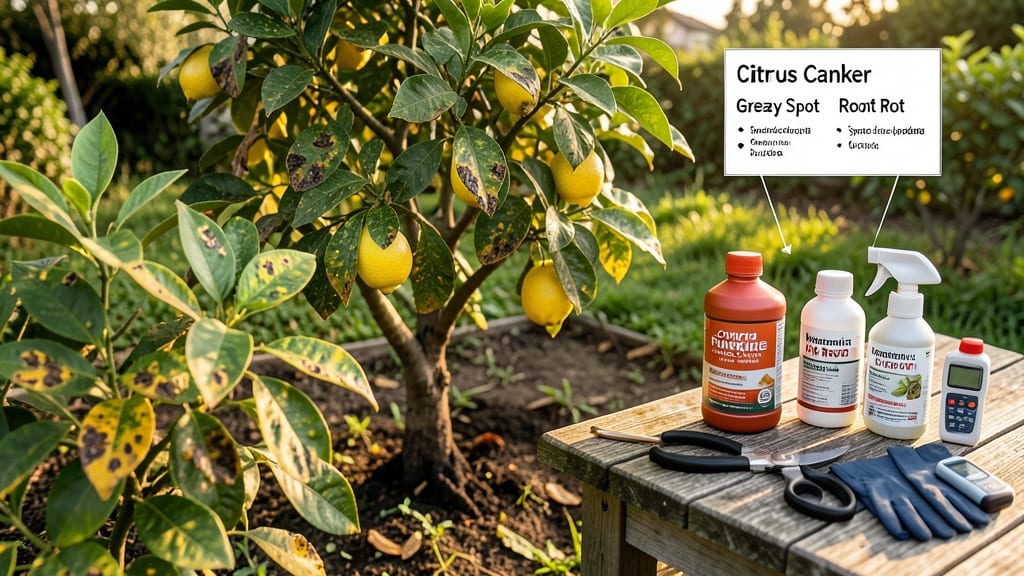
Your lemon tree disease treatment starts now—those yellowing leaves and sticky spots aren’t a death sentence, just a sign your tree needs urgent care. 🌿 I’ve nursed back three lemon trees from greasy spot and citrus canker using these same steps, and you can too.
The key is acting fast before the disease spreads to every branch.
Most lemon tree diseases—like greasy spot or root rot—start with tiny symptoms you might miss: dark spots with yellow halos, oily leaves, or sudden wilting. These aren’t just cosmetic; ignored, they’ll weaken your tree’s roots and fruit production.
The good news? Copper fungicides, pruning sick branches, and adjusting watering habits can turn things around in weeks.
You’ll see fresh, glossy leaves within 4-6 weeks if you catch it early. The secret’s in the details: spraying at dawn, removing infected foliage before it drops, and keeping the soil just damp—not soggy. Even stubborn cases respond when you combine organic neem oil with a proper cleanup.
This works for patio trees, backyard groves, or container citrus—just adjust the spray volume. The worst mistake? Waiting until the tree looks half-dead. Let’s get your lemon tree back to thriving before the next harvest.
Root Causes Of Lemon Tree Ailments
Lemon trees, with their fragrant blossoms and tangy fruit, are prized additions to any garden—but they’re not immune to disease. Understanding why these issues arise is the first step to prevention and treatment.
Below, we break down the most common culprits behind lemon tree diseases, from environmental stressors to microbial invaders.
Lemon trees thrive in specific conditions, and when those needs aren’t met, stress sets in, making them vulnerable to disease.
- Inadequate sunlight: Lemon trees require 6–8 hours of direct sunlight daily. When deprived, their immune systems weaken, leaving them susceptible to fungal infections like Alternaria or Phytophthora. Look for yellowing leaves or stunted growth as red flags.
- Extreme temperature swings: While lemons tolerate heat, they hate sudden cold snaps (below 30°F). Frost damage cracks cell walls, inviting bacterial and fungal pathogens like Citrus Canker or Melanose.
- Improper drainage: Soggy roots from overwatering or compacted soil create anaerobic conditions, breeding Phytophthora (a water mold). Roots turn brown and mushy—a sure sign of root rot.
💡 Pro Tip: Use a moisture meter to check soil—it should feel like a wrung-out sponge, not a swamp.
Pathogens are the unseen villains behind many lemon tree diseases. These microbes exploit weak spots—often created by environmental stress—to take hold.
| Disease | Cause | How It Spreads |
|---|---|---|
| Citrus Canker (Xanthomonas axonopodis) | Bacteria that thrives in wet, humid conditions | Rain, wind, or contaminated tools; enters through leaf wounds |
| Alternaria Leaf Spot (Alternaria alternata) | Fungus favored by high humidity and poor airflow | Spores splash onto leaves during watering or rain |
| Phytophthora Root Rot (Phytophthora spp.) | Water-loving oomycete (not a true fungus) | Overwatered soil or standing water near roots |
⚠️ Watch For: Dark, greasy spots on leaves (Canker), concentric rings (Alternaria), or wilting despite moist soil (Root Rot).
Pests don’t just sap nutrients—they injure your tree, creating entry points for diseases. Here’s how:
- Scale insects and aphids: Their sticky honeydew attracts sooty mold (Capnodium), a black fungal film that smothers leaves, blocking sunlight and stunting growth.
- Citrus leaf miners: Larvae burrow into leaves, creating tunnels that weaken tissue and invite secondary infections like Botrytis (gray mold).
- Thrips: Their feeding scars disrupt leaf cell integrity, making plants more susceptible to Melanose (a fungal spot disease).
🛡️ Prevention: Inspect leaves weekly for webbing, holes, or tiny black frass (insect droppings). Use neem oil or insecticidal soap to deter pests before they cause damage.
Even well-meaning gardening habits can trigger disease. Here’s what’s likely going wrong:
- Over-fertilizing: Excess nitrogen promotes lush, soft growth that’s highly attractive to pests and fungi. Stick to a balanced 6-6-6 or 10-10-10 fertilizer in early spring.
- Pruning wounds left exposed: Cuts heal slower in citrus, leaving them vulnerable to Canker or Melanose. Always sterilize tools with 70% isopropyl alcohol and seal pruning cuts with pruning paint.
- Reusing contaminated pots/soil: Old soil may harbor Phytophthora spores. Sterilize containers with a 10-minute bleach soak (1 part bleach to 9 parts water) before repurposing.
🔥 Key Insight: Most diseases exploit stress. Correcting sunlight, water, and soil conditions often prevents the need for harsh treatments.
How to Fix Lemon Tree Diseases
Reviving a sick lemon tree starts with identifying the root cause—but once you know what’s ailing it, action is simple. Below are practical, step-by-step solutions for the most common diseases, paired with prevention tips to keep your tree thriving long-term.
Think of this as your emergency repair kit for a fungus-free, happy citrus tree! 🌿💧
Cause: Xanthomonas bacteria spread by wind, rain, or tools. Fix:
- Prune infected branches 🔪
- Cut 6 inches below visible lesions (use sterilized pruners—wipe with rubbing alcohol between cuts).
- Burn or bag infected clippings (do not compost them!).
- Clean the wounds 🧼
- Scrub pruning cuts with a 10% bleach solution (1 part bleach to 9 parts water) to prevent spread.
- Apply copper-based bactericide 🛡️
- Spray copper fungicide (like Copper Soap) every 7–10 days for 4–6 weeks.
- Reapply after rain.
- Isolate the tree 🏝️
- Keep it 5+ feet away from other citrus trees to avoid cross-contamination.
💡 Prevention Tip:
- Water at the base (avoid overhead spraying).
- Remove fallen leaves regularly (bacteria love damp debris).
Cause: Overwatering or poor drainage leads to Phytophthora fungus. Fix:
- Stop watering immediately 🚰
- Let the soil dry out completely for 3–5 days before resuming.
- Improve drainage 🏗️
- Amend soil with perlite or sand (aim for 50% organic, 50% inorganic mix).
- If in a pot, add drainage holes (or repot to a larger container).
- Fungicide treatment 💊
- Drench roots with hydrogen peroxide (3%) or Fungicide 3 (follow label instructions).
- Repeat every 2 weeks until new growth appears.
- Adjust watering habits 💧
- Water deeply but infrequently (only when the top 2 inches of soil are dry).
💡 Prevention Tip:
- Use raised beds or containers if your soil drains poorly.
- Mulch with straw (keeps roots cool but avoids soggy soil).
Cause: Colletotrichum fungus thrives in humid, shaded conditions. Fix:
- Remove infected leaves/fruit 🍃
- Pick off yellow or spotted leaves and destroy them (don’t compost).
- Spray with fungicide 🛠️
- Use Neem oil (early stages) or chlorothalonil (for severe cases).
- Apply every 10–14 days during wet seasons.
- Boost airflow 🌬️
- Prune dense branches to improve sunlight penetration.
- Space trees 6–8 feet apart if planting new ones.
- Adjust watering 🌧️
- Water early in the morning (avoid evening moisture).
💡 Prevention Tip:
- Avoid overhead irrigation—use drip systems instead.
- Plant in full sun (6+ hours daily).
Cause: Diplodia natalensis fungus causes black spots on leaves/fruit. Fix:
- Prune affected branches 🌳
- Cut back severely spotted limbs (sterilize tools between cuts).
- Copper fungicide spray 🛡️
- Apply copper hydroxide (like Kocide) every 2–3 weeks during spring/summer.
- Sanitize tools 🧹
- Wipe pruners with bleach or rubbing alcohol after each use.
- Encourage new growth 🌱
- Fertilize with low-nitrogen, high-potassium (like 5-10-10) to strengthen the tree.
💡 Prevention Tip:
- Harvest fruit promptly (don’t let it rot on the tree).
- Avoid wetting foliage when watering.
- Assess the damage 🔍
- Take photos and compare symptoms to guides (like [this one](https://www.extension.ucla.edu/)).
- Adjust care routines ⚖️
- Overwatered? Let soil dry out.
- Underwatered? Increase frequency (but check drainage first!).
- Boost immunity 💪
- Feed with citrus-specific fertilizer (high in zinc and iron—common deficiencies weaken trees).
- Compost tea (homemade or store-bought) adds beneficial microbes.
- Monitor progress 📈
- Track new growth for 4–6 weeks—if no improvement, consult a local extension office.
- Rotate fungicides (don’t use the same one repeatedly—fungi adapt!).
- Test soil pH (ideal for citrus: 6.0–7.0—adjust with lime or sulfur if needed).
- Quarantine new plants for 2 weeks before adding to your grove.
With these fixes, your lemon tree can bounce back—sometimes in as little as 3–4 weeks! 🌟 The key is early action and consistent care. Now grab those pruners and get to work!
Frequently asked questions
How do I tell if my lemon tree has a fungal disease vs. bacterial?
Fungal diseases like greasy spot or black spot usually show up as dark, circular spots with yellow halos on leaves. Bacterial issues like citrus canker create raised, oily-looking lesions that ooze when wet. Check the edges: fungi often have fuzzy growth, while bacteria produce sticky, watery exudate.
Can I use household items like vinegar or baking soda to treat lemon tree diseases?
Vinegar (diluted to 1 tablespoon per gallon of water) can help with fungal spores, but it’s not as effective as copper fungicides. Baking soda (1 teaspoon + a drop of dish soap per quart of water) may prevent some fungal growth, but it won’t cure established infections. For serious cases, stick to copper-based treatments or neem oil.
How often should I spray my lemon tree with fungicide?
For active infections, spray every 7–10 days for 4–6 weeks. Once symptoms disappear, switch to a preventative schedule: every 4–6 weeks during humid seasons (spring/fall). Always spray in the early morning so leaves dry quickly—this prevents fungal spores from settling.
Will my lemon tree recover if I cut off all the diseased branches?
Pruning alone won’t cure the disease, but it removes the infection source and helps the tree focus energy on new growth. Combine pruning with fungicide treatment and proper care (like improving drainage) for best results. With consistent treatment, most trees show recovery within 4–6 weeks of starting the process.
Is it safe to eat fruit from a lemon tree with disease?
Only eat fruit from branches that are completely free of visible spots or lesions. If the tree has bacterial canker or severe fungal infections, the fruit may contain pathogens. When in doubt, remove all affected fruit and focus on treating the tree first. Healthy trees will produce safe, delicious lemons in 6–12 months.