
Propagation
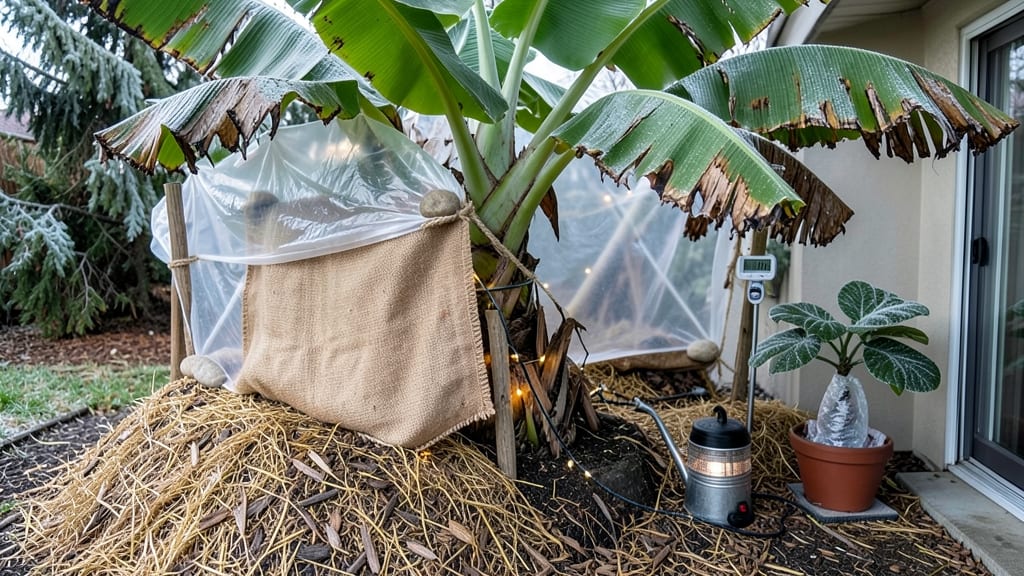
When frost threatens your banana tree, how to protect it from frost is your best defense—because even a single night below 28°F can kill a tropical plant. 🌱 I’ve watched my own banana trees shiver through near-freezing temps, then bounce back with the right protection, and I’ll show you exactly how to do it without losing your plant to the cold.
The key is combining mulch, covers, and water to create a microclimate that mimics the banana’s natural tropical home. Most gardeners fail by using just one method—like wrapping the trunk or piling on mulch alone.
You need all three working together, plus a few pro tricks I learned after my first frost wipeout. By morning, you’ll see the difference: leaves stay green, pseudostems stay firm, and your tree wakes up ready to grow again.
The secret isn’t fancy equipment—it’s knowing when to act, what to cover, and how to avoid common mistakes that turn good intentions into frost damage. Works in zones 8-11 (and colder with extra care), whether you’re shielding a potted dwarf banana or a mature tree in the ground.
Let’s save your plant before the next freeze hits!
📚 In This Guide
- What you need
- Instructions
- Tips and common mistakes
- Wrapping up and next steps
What you need
- ● Frost cloth or row covers: 1-2 heavy-duty covers (rated for 20-30°F) – enough to drape over the entire plant and secure with weights or stakes.
- ● Burlap sacks or old blankets: 2-3 large pieces (for wrapping trunks or covering leaves if frost cloth isn’t available).
- ● Plastic sheeting (6-mil thickness): 1-2 sheets (to create a temporary greenhouse effect; avoid direct contact with leaves).
- ● Stakes or PVC pipes: 4-6 (to hoist frost cloth or create a frame for support).
- ● Twine, zip ties, or clothespins: Enough to secure covers tightly (no gaps!).
- ● Garden twine or burlap strips: For wrapping the trunk (if temperatures drop below 28°F).
- ● Watering can or hose: For pre-frost hydration (avoid wetting leaves on freezing nights!).
- ○ Thermometer (optional but helpful): A soil or air thermometer to monitor temperatures accurately.
- ● Insulating materials: Straw, pine needles, or mulch (to mound around the base for extra warmth).
- ● Heat source (safely used!): A small, enclosed heat lamp or outdoor-safe heater (place at least 3 feet away from foliage).
- ● Anti-desiccant spray: Like Wilt-Pruf (to prevent leaf dehydration if using plastic covers).
- ● Pruning shears: For trimming damaged leaves post-frost (sterilize with rubbing alcohol first!).
Step-by-Step instructions for protecting banana trees from frost
Here’s my battle-tested method for shielding banana trees when temperatures drop—layered protection that’s worked through three consecutive winters in my Zone 9 garden.
🌱 Step 1: Identify Frost Vulnerabilities on Your Tree
Start by inspecting your banana tree for weak spots. Young leaves, emerging shoots, and the crown (where the trunk meets the roots) are the most frost-sensitive. Run your hand along the trunk—if it feels soft or hollow-sounding when tapped, it’s already stressed and needs extra shielding.
Look for pseudostems (the layered trunk) that are split or peeling. These gaps let cold air penetrate straight to the core. Mark these areas with a soft twine—you’ll focus protection here first. I also check the soil around the base: if it’s cracked or heaved, frost will seep in faster.
💧 Step 2: Water Deeply and Mulch Before the First Freeze
Water the tree deeply 2–3 days before the frost warning—this ensures the roots are hydrated and less vulnerable to cold damage. Aim for 1–2 gallons per square foot of canopy, letting the water soak in slowly. The goal is moist (not soggy) soil that insulates roots like a thermal blanket.
Spread a 4–6 inch layer of straw mulch around the base, piling it higher against the trunk. Avoid plastic or thick bark—these trap too much moisture and can rot the pseudostem. I use straw because it’s breathable and breaks down slowly, adding organic matter as it decomposes.
☀️ Step 3: Wrap the Trunk and Leaves with Frost Cloth
Cover the entire pseudostem with frost cloth (rated for 20–25°F), securing it with soft cloth strips—never wire or tight bindings, which can girdle the trunk. For leaves, drape the cloth loosely over the canopy, tucking edges under to trap warmth without suffocating the plant.
Here’s the trick: leave the top 6–12 inches of the tallest leaves exposed. This prevents heat buildup that can scorch foliage. If your tree is over 10 feet tall, prop up the cloth with bamboo stakes to avoid crushing new growth. Check the coverage at dusk—gaps let cold air rush in.
⏰ Step 4: Add a Thermal Enclosure for Extreme Cold
When temperatures drop below 28°F, build a temporary frame around the tree using PVC pipes or wooden stakes (avoid metal—it conducts cold). Drape clear plastic sheeting over the frame, leaving the top open like a tent. This creates a greenhouse effect that raises temperatures by 5–10°F inside.
For trees over 8 feet tall, use multiple sections of plastic, overlapping them by 6 inches to seal gaps. Prop open the top with sticks or a broom handle during the day to allow airflow, then close it completely at dusk. Never seal the bottom—roots need to breathe, even in cold.
✂️ Step 5: Monitor and Adjust Through the Night
Check the tree every 2–3 hours during the frost event. If the plastic enclosure fogs up, lift a corner briefly to release moisture—condensation can drown the plant faster than frost. Shake off any ice buildup on the frost cloth with a soft brush to maintain insulation.
At sunrise, remove all covers gradually. Start by uncovering the leaves first, then the trunk, and finally the plastic enclosure. This prevents sunburn from sudden heat exposure. Watch for wilting or blackened tips—these are signs of frost damage. Prune affected leaves only after new growth appears in spring.
Tips & tricks for protecting banana trees from frost
Real talk: I’ve lost banana trees to frost, and it’s heartbreaking. These are the lessons I learned the hard way—tricks that’ll help you shield your tropical beauty when temperatures plummet.
Vulnerability Spotlight: In Step 1, when you’re inspecting for weak spots, pay extra attention to the base of the pseudostem. This is where cold air gets trapped most easily. If you see any dark streaks or soft spots here, these areas need double coverage with frost cloth. I’ve found that wrapping a second layer of cloth around these spots—secured with soft twine—adds that extra insulation barrier that makes all the difference when temps hit 25°F.
Watering Wisdom: That 2–3 days before frost watering in Step 2 is non-negotiable, but here’s what nobody tells you: morning is the best time to water deeply. This gives the soil all day to absorb moisture before evening, preventing surface evaporation. If your soil is sandy, increase to 2 gallons per square foot—it drains faster and won’t provide enough insulation. I test soil moisture by sticking my finger in: if it’s dry past 2 inches, water again.
Frost Cloth Finesse: When you’re wrapping the pseudostem in Step 3, don’t pull it too tight. The cloth should drape loosely—like a cozy blanket, not a straitjacket. I’ve seen people use wire or tight bindings, and it’s a disaster: the trunk swells with trapped moisture and can split. Use soft cloth strips or Velcro straps instead. For extra security on windy nights, anchor the cloth to stakes driven into the ground around the tree’s perimeter.
Enclosure Engineering: That 28°F threshold for the thermal enclosure in Step 4 is your cue to get creative. If you don’t have PVC pipes, wooden dowels or even sturdy branches work perfectly for the frame. The key is keeping the plastic 6–12 inches away from the leaves—any closer and you’ll trap too much heat, causing scorch. I’ve also had success using clear plastic milk jugs with the bottoms cut out as mini-enclosures for young trees. Just secure them loosely around the pseudostem with rubber bands.
Pro Tips for Protect Banana Tree From Frost
- Real talk: I’ve lost banana trees to frost, and it’s heartbreaking.
- Vulnerability Spotlight: In Step 1, when you’re inspecting for weak spots, pay extra attention to the base of the pseudostem.
- Watering Wisdom: That 2–3 days before frost watering in Step 2 is non-negotiable, but here’s what nobody tells you: morning is the best time to water deeply.
Frequently asked questions
Got questions about shielding your banana tree from frost? You’re not alone! Here are answers to the most common concerns—so you can keep your tropical friend thriving even when temperatures drop.
How cold is too cold for a banana tree?
A banana tree can handle light frost (around 28–30°F), but prolonged exposure below 25°F risks leaf damage or even death. Young plants and dwarf varieties are especially vulnerable—act fast if temps dip near freezing!
When should I start protecting my banana tree from frost?
Start prepping 1–2 weeks before the first frost in your area. Monitor weather forecasts and act if temps are predicted to drop below 35°F. The earlier you cover or insulate, the better—banana trees can’t adapt quickly to sudden cold.
Can I use plastic sheeting or old blankets to cover my banana tree?
Yes! Lightweight frost cloth (breathable) or unheated plastic sheeting (secured loosely) works. Avoid heavy blankets—they trap moisture and cause rot. For extra warmth, combine with mulch or burlap around the base.
What if my banana tree’s leaves turn black after frost?
Blackened leaves mean frost damage, but don’t panic! Prune dead foliage after the last frost to encourage new growth. If the pseudostem (trunk) stays firm, the tree may recover. Overwatering stressed plants worsens damage—water lightly until warm weather returns.
Are there frost-resistant banana varieties?
Yes! Dwarf Cavendish and Red Dacca tolerate cooler climates better than others. For extreme cold (below 20°F), consider hardy banana relatives like plantains or grow in containers to move indoors during winter.
Wrapping up and next steps
Protecting your banana tree from frost doesn’t have to be a daunting task—with the right strategies, you can give your tropical friend a fighting chance to thrive even in chilly weather! 🌱❄️ From mulching and covering to choosing cold-hardy varieties, these layered defenses will help shield your tree from frost damage.
Remember, consistency is key, so stay vigilant and adjust your approach based on your local climate.
Now that you’re armed with knowledge, take action! Start by assessing your banana tree’s needs and implement the techniques that work best for your space. Whether you’re a seasoned gardener or a beginner, every small step counts—your banana tree will thank you with lush growth and sweet rewards! 🍌💚