
Trees
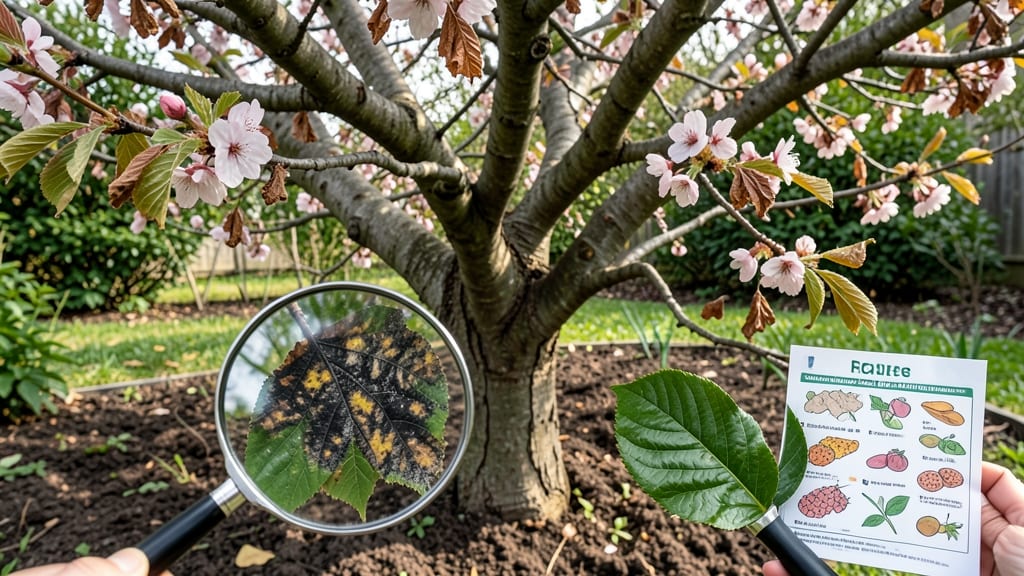
Your cherry tree’s problems with the leaves are telling you something’s wrong—and you can fix it fast. 🌿 That yellowing, curling, or spotted foliage isn’t just a cosmetic issue; it’s a cry for help. I’ve seen firsthand how quickly small problems spiral into major damage, but the good news?
Most leaf issues on cherry trees have simple fixes once you know what to look for. Start by checking for water stress (too much or too little), nutrient deficiencies (like iron or nitrogen), or pests (aphids, mites, or borers).
Fungal diseases like powdery mildew or leaf spot often show up as dark spots with yellow halos—those need pruning and fungicide. The key is acting before the problem spreads to branches or fruit. Within a week of treatment, you’ll see improvement if you catch it early.
Prune infected leaves immediately, apply neem oil or copper fungicide, and adjust watering habits. Prevent future issues by mulching properly, avoiding overhead watering, and monitoring for pests regularly. Your tree’s health—and those sweet summer fruits—depend on it.
📚 In This Guide
- What you need
- Instructions
- Tips and common mistakes
- Wrapping up and next steps
What you need
- ● Hand lens or magnifying glass – For closely inspecting leaf damage, pests, or fungal spores (10x magnification recommended).
- ● Pruning shears or loppers – Sharp, sterilized tools for removing diseased or damaged branches (sterilize with rubbing alcohol between cuts).
- ● Gloves (nitrile or rubber) – Protects hands from sap, pests, or harsh chemicals (1–2 pairs).
- ● Spray bottle (16 oz) – For diluted solutions like neem oil or fungicides (add a spray nozzle for precision).
- ● pH testing kit – Soil pH affects nutrient uptake; test kits include strips or meters (affordable digital kits work well).
- ● Fertilizer (balanced or specific to deficiency) – Choose a slow-release granular (e.g., 10-10-10 NPK) or liquid fertilizer (follow package rates).
- ● Fungicide (copper-based or systemic) – For fungal issues like powdery mildew (e.g., Neem Oil or Myclobutanil).
- ● Insecticidal soap or horticultural oil – Targets mites, aphids, or scale insects (follow label instructions).
- ● Watering can or hose with adjustable nozzle – For deep watering (aim for 1–2 inches per week, depending on climate).
- ● Plastic bags or containers – To collect leaf/pest samples for lab testing (if needed).
- ● Leaf sample bags (paper or silica gel) – Preserves samples for professional diagnosis (available at garden centers).
- ● Soil moisture meter – Checks root-zone hydration without guesswork.
- ● Mulch (wood chips or straw) – Retains moisture and regulates soil temp (2–3 inches, keep 6 inches from trunk).
- ● Tree banding material – Protects trunk from pests like borers (if infestations are severe).
- ● Camera or smartphone – Document symptoms before/after treatment for progress tracking.
How to diagnose and fix cherry tree leaf problems quickly
Here's how I tackle leaf issues on cherry trees—no guesswork, just clear steps to identify and treat problems before they spread.
🌿 Step 1: Identify the Problem by Leaf Pattern and Timing
Start by examining the pattern and timing of leaf damage. Yellowing leaves that start at the edges and spread inward often signal fungal issues like leaf spot or powdery mildew, common in wet springs. If you see small brown spots with yellow halos, that's likely cherry leaf spot, the most aggressive disease for these trees.
Check the undersides of leaves too—tiny white cottony growth means powdery mildew. For holes or chewed edges, look for caterpillars or beetles. I always inspect at morning light when dew is present, as moisture reveals fungal growth best. Note whether problems appear on young leaves (nutrient deficiency) or older leaves (disease or pest buildup).
💧 Step 2: Rule Out Environmental Causes First
Before treating, confirm whether the issue stems from watering or light problems. Overwatered trees show yellow leaves with drooping that recovers after drying. Underwatered trees have crispy edges and soil that pulls away from the pot. I test moisture by sticking my finger 2 inches into soil—if it's dry, water deeply until it drains from the bottom.
Check sunlight exposure next. Cherry trees need 6-8 hours of full sun. If leaves are pale or stretched, move the tree to a sunnier spot. Variegated leaves or slow growth? It's likely insufficient light. I always compare affected branches to healthy ones—they're your control group for spotting inconsistencies.
✂️ Step 3: Treat Fungal Issues with Copper-Based Sprays
For leaf spot or powdery mildew, I use a copper fungicide (like copper sulfate) mixed at 1 tablespoon per gallon of water. Spray thoroughly on both leaf surfaces and the tree trunk, focusing on undersides where spores hide. Apply in early morning to prevent leaf burn from afternoon sun.
Remove all fallen leaves and prune infected branches 6 inches below damage to prevent spread. Sterilize pruners with 70% isopropyl alcohol between cuts. I repeat treatments every 7-10 days until new leaves emerge without spots. Never use household fungicides—they can harm beneficial insects and leave chemical residues.
🪴 Step 4: Address Pest Infestations with Targeted Solutions
For chewing insects, I use neem oil (1 teaspoon per quart of water) or insecticidal soap for soft-bodied pests like aphids. Spray until leaves glisten, covering all surfaces. For borers (evident from sawdust-like frass), inject beneficial nematodes into the soil around the tree base—they target larvae without harming the tree.
Handpick large pests like caterpillars during early morning when they're sluggish. I always check the tree after rain, as moisture brings pests out of hiding. Avoid broad-spectrum pesticides—they kill pollinators and disrupt the tree's natural defenses. If pests return, consider reflective tape around the trunk to deter flying insects.
🌱 Step 5: Prevent Future Issues with Year-Round Care
Start with proper pruning in late winter to improve airflow—remove 1/3 of the canopy and thin out crossing branches. I sterilize tools with bleach solution (1 part bleach to 9 parts water) to prevent disease spread. Mulch with 3-4 inches of organic matter (like wood chips) to retain moisture and regulate soil temperature.
Fertilize in early spring with a balanced 10-10-10 formula, applying ½ pound per inch of trunk diameter. Water deeply once a week during dry spells, aiming for 1-1.5 inches of water. Monitor for stress signs like wilting or leaf curl—these often signal underlying issues before visible damage appears.
Tips & tricks for diagnosing cherry tree leaf problems quickly
Here's what nobody tells you about speeding up your diagnosis—and why timing saves your tree.
Timing is Everything: The 6-8 hours of sunlight your cherry tree needs isn't just about growth—it's your first clue to leaf problems. If leaves show stress symptoms after just 4-5 hours of direct sun, it's likely a nutrient deficiency or early-stage fungal infection. I check for this by comparing sun-exposed branches to shaded ones during midday—differences reveal the root cause faster than any test kit.
Leaf Inspection Hack: Use a hand lens (10x magnification) to examine leaf undersides for fungal spores or tiny eggs. I found powdery mildew on my tree by noticing the fuzzy white growth only when I looked closely—it had spread to 20% of leaves before I spotted it. This early detection means treatments work before the problem becomes systemic. (Optional: A flashlight helps too—shine it through leaves to spot hidden damage.)
Environmental Control: When testing soil moisture, press your finger 2 inches deep—this is where roots actively absorb water. If the soil feels damp at this depth but leaves are still wilting, your tree might have root rot from overwatering. I've seen this happen when people water on a schedule rather than checking moisture first. The fix? Let the top 3 inches dry out before watering again.
Treatment Timing: Apply copper fungicide or neem oil in the early morning (before 9 AM) to maximize effectiveness. The dew helps the solution adhere to leaves, and morning applications prevent leaf burn from afternoon sun. I schedule my treatments on overcast days when UV exposure is lower—this gives the spray more time to work without evaporating quickly.
Pro Tips for Cherry Tree Problems Leaves
- Here's what nobody tells you about speeding up your diagnosis—and why timing saves your tree.
- Timing is Everything: The 6-8 hours of sunlight your cherry tree needs isn't just about growth—it's your first clue t...
- Leaf Inspection Hack: Use a hand lens (10x magnification) to examine leaf undersides for fungal spores or tiny eggs. ...
Frequently asked questions
Got questions about your cherry tree’s leaves? You’re not alone!
Here are answers to the most common concerns—so you can diagnose issues fast and keep your tree thriving.
Why are my cherry tree leaves turning yellow?
Yellowing leaves (chlorosis) usually mean nutrient deficiencies, often iron or nitrogen. Check the soil pH—cherry trees prefer 6.0–7.0. Apply a balanced fertilizer or chelated iron in early spring. Overwatering can also cause this—ensure soil drains well.
What do brown spots on cherry tree leaves mean?
Brown spots with yellow halos? Likely fungal leaf spot (e.g., powdery mildew or anthracnose). Prune infected branches, remove fallen leaves, and spray with copper fungicide or neem oil. Space trees for airflow—crowding worsens fungal issues.
When should I prune cherry tree leaves with disease?
Prune during dormancy (late winter/early spring) to remove dead or diseased leaves. Avoid pruning in wet weather to prevent spreading spores. Sterilize tools with 70% isopropyl alcohol before/after cutting to stop cross-contamination.
Are cherry tree leaves safe to compost if they’re diseased?
No! Diseased leaves (e.g., spots, mold) can spread pathogens. Do not compost them. Instead, bag and discard in yard waste or burn (if legal). Healthy leaves? Chop them first to speed decomposition.
Why are my cherry tree leaves curling?
Curling often signals pests (aphids, mites) or environmental stress. Check undersides of leaves for tiny webs or insects. Spray with soapy water or insecticidal soap. Heatwaves or drought can also cause curling—water deeply 1–2x/week.
Is it too late to fix cherry tree leaf problems in fall?
Fall is a great time for preventative care! Remove fallen leaves, apply winter mulch, and prune lightly. Avoid heavy fertilizing—focus on soil health. Early spring is ideal for treatments, but fall prep sets you up for success!
Wrapping up and next steps
Diagnosing and treating cherry tree leaf problems doesn’t have to be overwhelming—with the right knowledge, you can restore your tree’s health in no time! 🌿 From fungal infections to pest invasions, early action makes all the difference. Remember: patience and consistency are key—your tree will thank you with vibrant, lush foliage.
Ready to take the next step? Start by inspecting your tree regularly and keeping a garden journal to track changes. If the issue persists, don’t hesitate to consult a local arborist—they’re equipped with advanced tools to help! With a little effort, your cherry tree will thrive for years to come.