
Light Requirements
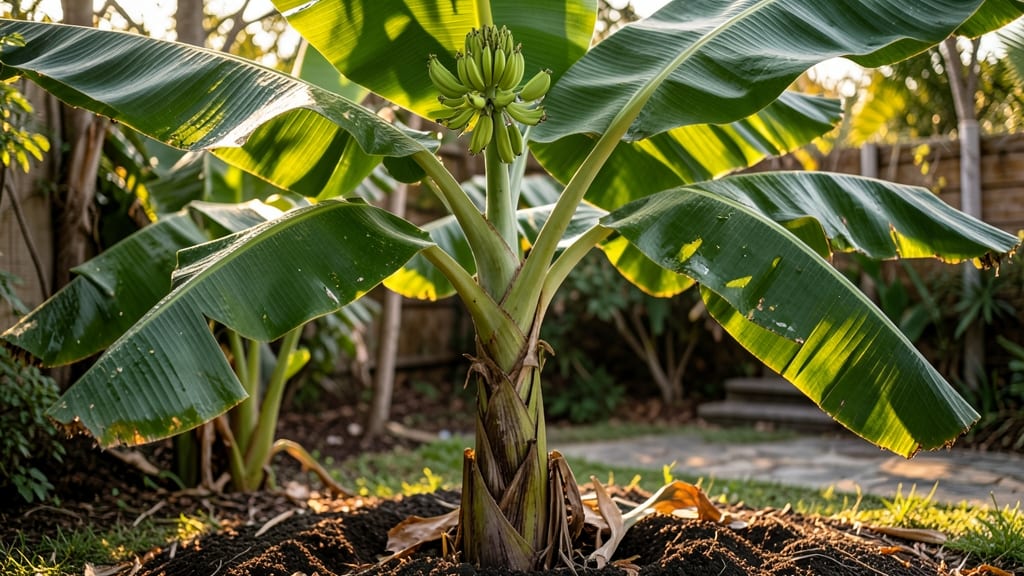
Growing a banana tree in full sun transforms your yard into a tropical oasis—if you nail the light, soil, and water balance. 🌿 I’ve watched my own banana plant go from a struggling sapling to a 10-foot-tall producer by mastering these three critical factors, and I’ll show you exactly how to replicate that success in your climate.
Full sun means 6+ hours of direct sunlight daily, but banana trees need more than just light—they crave warmth and humidity. In tropical zones (like Florida or Hawaii), they thrive year-round, while subtropical growers (Zones 9-11) must protect them from winter chill.
The soil must drain well but stay consistently moist, and mulching helps retain that tropical feel.
You’ll see rapid growth within 3-4 months if you keep the soil warm, water deeply but infrequently, and fertilize lightly during active growth. The large, dramatic leaves and eventual fruit clusters make it worth the effort—even in containers for cooler climates.
Just avoid overwatering, which is the #1 killer of banana trees.
This method works for both dwarf and large varieties, whether planted in-ground or in containers. The key is adapting to your local heat and humidity patterns. Let’s get your banana tree thriving in the sun!
📚 In This Guide
- What you need
- Instructions
- Tips and common mistakes
- Wrapping up and next steps
What you need
- ● Banana plant (Musa spp.): Choose a variety suited to your climate (e.g., Musa acuminata or Musa balbisiana hybrids). Start with a healthy, mature plant or a well-rooted nursery specimen.
- ● Well-draining soil: A mix of 60% topsoil, 30% compost, and 10% perlite or coarse sand (1–2 cubic yards for mature plants). Banana trees hate soggy roots!
- ● Fertilizer: Balanced fertilizer (10-10-10 or 8-3-9): 1–2 lbs per year for established trees, applied in 3–4 split doses (spring, summer, and early fall).
- ● Potassium-rich fertilizer (e.g., banana-specific or high-potassium formula): Boosts fruit production. Use 1 lb per tree during flowering.
- ○ Mulch (optional but recommended): 3–4 inches of organic mulch (straw, wood chips, or leaves) to retain moisture and regulate soil temperature.
- ● Garden shovel or spade: For digging planting holes (12–18 inches deep and wide).
- ● Garden trowel: For transplanting smaller plants or adjusting soil around roots.
- ● Pruners or sharp shears: To trim dead leaves or suckers (sterilize with rubbing alcohol between cuts!).
- ● Watering can or hose with adjustable nozzle: Banana trees need 1–2 inches of water per week (more in extreme heat).
- ○ Staking materials (optional): 3–4 bamboo stakes or wooden posts (6–8 feet tall) + soft ties (e.g., garden twine) to support young or fruiting plants.
- ● pH test kit: Banana trees thrive in slightly acidic to neutral soil (pH 6.0–7.5). Adjust with lime (to raise pH) or sulfur (to lower pH) if needed.
- ● Sunlight access: 6+ hours of direct sunlight daily. Partial shade (e.g., dappled light) is tolerable in hot climates, but full sun yields the best fruit.
- ● Warm climate: Banana trees are tropical and thrive in USDA Zones 10–12. In cooler zones, grow in containers and overwinter indoors.
- ● Wind protection: Young plants are vulnerable to wind damage. Use a windbreak (e.g., burlap fence or shrubs) if needed.
Step-by-step instructions for growing a banana tree in full sun
Sun-loving banana trees thrive with the right care—here’s how to give yours the perfect full-sun environment.
☀️ Step 1: Choose the Right Location for Maximum Sunlight
Banana trees need 6-8 hours of direct sunlight daily to produce fruit and grow strong. I always pick the southernmost, sunniest spot in my yard—this is non-negotiable. If you’re in a hot climate, afternoon shade helps prevent leaf scorch, but morning sun is ideal for most regions.
Test your spot for a week first. If nearby plants wilt by noon, your banana tree will struggle. Look for dappled shade options if needed—just ensure at least 5 hours of full sun. Avoid windy areas; banana trees have large leaves that tear easily in gusts.
🪴 Step 2: Plant in Well-Draining, Nutrient-Rich Soil
Banana trees hate soggy roots, so amend heavy soil with 3-4 inches of compost and a handful of perlite or coarse sand to improve drainage. I dig a hole twice as wide as the root ball and mix in slow-release fertilizer (like 10-10-10) to kickstart growth.
Place the tree so the top of the root ball sits just above ground level—this prevents rot. Gently backfill with the amended soil, pressing lightly to remove air pockets. Water deeply right after planting to settle the roots, but avoid puddles. Banana trees in containers need drainage holes and a pot at least 2 feet wide for mature growth.
💧 Step 3: Water Deeply and Consistently
Banana trees drink a lot—especially in full sun. Water 1-2 inches per week, more in extreme heat. I check soil moisture by sticking my finger 2 inches deep; if it’s dry, it’s time to water. Morning watering is best to reduce fungal risks from damp leaves overnight.
Mulch around the base with 3-4 inches of organic mulch (like straw or wood chips) to retain moisture and cool roots. Keep mulch 6 inches away from the trunk to prevent rot. Overwatering is the #1 killer—yellow leaves often mean too much water, not too little.
✂️ Step 4: Fertilize and Prune for Strong Growth
Feed banana trees every 2-3 months with a balanced fertilizer (like 12-12-12) during growing season. I also add potassium-rich fertilizer (like banana peel tea) to boost fruit production. Stop fertilizing in fall to let the plant rest.
Prune only to remove dead or yellowing leaves—never cut healthy ones. If your tree grows too tall, trim only the top 1-2 feet to encourage bushier growth. Banana trees are heavy feeders, so don’t skip fertilizer if you want fruit. Weak plants won’t produce.
🌱 Step 5: Protect and Monitor for Pests/Disease
Watch for aphids, spider mites, or fungal spots—common in humid, sunny climates. I spray leaves with neem oil weekly as a preventative. If you see black spots, improve airflow by thinning nearby plants. Banana trees in full sun are tough but need regular checks for early signs of stress.
In winter, if temps drop below 50°F, move potted trees indoors near a sunny window. Outdoor trees in frost-prone areas need mulch protection to insulate roots. With the right sun and care, your banana tree will reward you with lush foliage and fruit in just a few seasons.
Tips & tricks for perfect banana tree growth in full sun
These simple but game-changing strategies will help your banana tree thrive even in the harshest sun.
Sunlight Strategy: If your spot gets intense afternoon sun, consider using a lightweight shade cloth (30-50%) during peak hours (11 AM-3 PM) to prevent leaf scorch. I've seen banana trees in full sun develop brown edges when exposed to direct rays for too long. This is especially important in desert climates where temperatures can exceed 95°F—think of it as sun protection for your plant.
Soil Prep Secret: Before planting, I always test my soil's drainage by digging a hole, filling it with water, and checking how long it takes to drain. If water sits longer than 2 hours, you definitely need to add more perlite or coarse sand. Banana trees are tropical plants at heart—they want their roots to dry out slightly between waterings, not sit in soggy conditions.
Watering Wisdom: The 1-2 inches per week guideline works for average conditions, but in extreme heat (over 90°F), you might need to water every 2-3 days instead. I check by pushing my finger 2 inches deep—if it feels dry, it's time to water. Morning watering is key because it gives leaves time to dry before nightfall, reducing fungal risks. Never let your banana tree sit in standing water.
Fertilizer Timing: When you fertilize every 2-3 months, split the dose into two applications—half when you plant and half again 6-8 weeks later. This slow approach prevents root burn from too much fertilizer at once. I also mix in a handful of banana peels (chopped and composted) around the base for natural potassium. The peels break down slowly and add nutrients without overwhelming the plant.
Pro Tips for Banana Tree Full Sun
- These simple but game-changing strategies will help your banana tree thrive even in the harshest sun.
- Sunlight Strategy: If your spot gets intense afternoon sun, consider using a lightweight shade cloth (30-50%) during ...
- Soil Prep Secret: Before planting, I always test my soil's drainage by digging a hole, filling it with water, and che...
Frequently asked questions
How much full sun does a banana tree really need?
A banana tree thrives in 6-8 hours of direct sunlight daily. In hot climates, partial afternoon shade (like dappled light) can prevent leaf scorch. Young plants tolerate morning sun better than harsh afternoon rays—so start with 4-6 hours and gradually increase exposure.
Can banana trees survive full sun in cold climates?
Nope! Banana trees are tropical plants and cannot tolerate frost. In cold regions, grow them in containers and move them indoors or to a greenhouse during winter. If planted outdoors, use mulch and windbreaks to protect roots from temperature drops below 50°F (10°C).
Why are my banana tree leaves turning yellow in full sun?
Yellowing leaves often signal sunburn or overwatering. If the edges are crispy, it’s too much sun—provide afternoon shade. If the entire leaf yellows, check soil moisture: banana trees hate soggy roots. Water deeply but infrequently (let the top 2 inches of soil dry out between waterings).
What’s the best alternative if my yard doesn’t get full sun?
If full sun isn’t an option, try these low-light alternatives:
- Dwarf banana varieties (e.g., ‘Dwarf Cavendish’): Tolerate partial shade but grow slower.
- Ornamental banana plants (e.g., Ensete ventricosum): Hardy and shade-friendly.
- Indoor banana trees: Place near a bright window (south-facing) with grow lights if needed.
For fruiting, though, full sun is non-negotiable—these plants need it to produce bananas!
How long does it take for a banana tree to fruit in full sun?
With ideal conditions (full sun, warm temps, and proper care), a banana tree can produce fruit in 1-2 years. However, dwarf varieties may fruit in as little as 6-12 months, while larger types take 2-3 years. Patience is key—consistent sunlight and nutrients speed up the process!
Wrapping up and next steps
Growing a thriving banana tree in full sun is absolutely doable—just follow the right steps! With the perfect mix of light, soil, and care, you’ll be rewarded with lush foliage and sweet fruit. Remember, patience and consistency are key, so keep nurturing your plant with love and attention.
Ready to take the next step? Start by monitoring your banana tree’s progress—adjust care as needed—and soon, you’ll be enjoying the tropical beauty (and maybe even bananas!) right in your own backyard. 🌱✨