
Watering
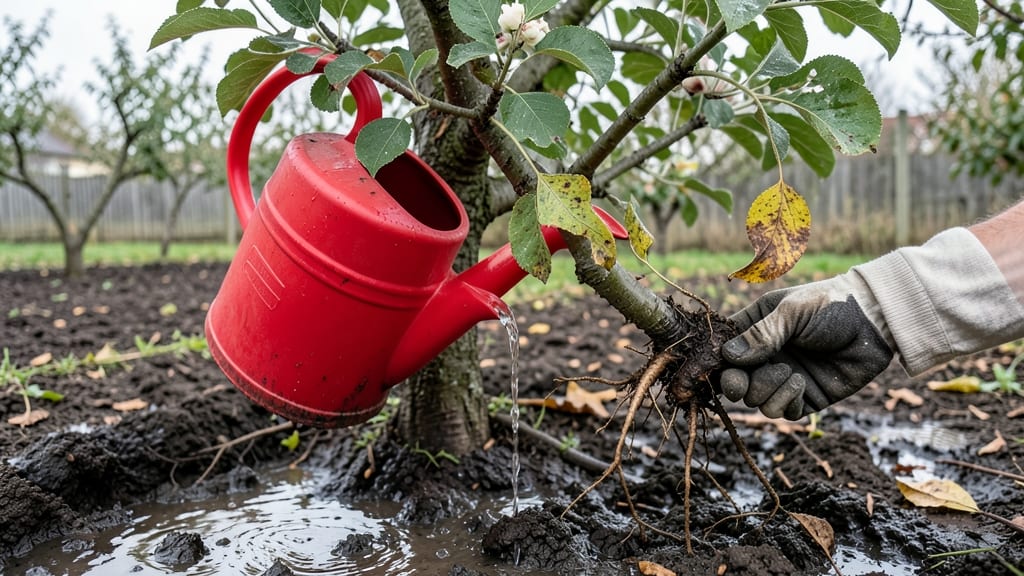
Your apple tree’s drooping leaves and yellowing foliage aren’t just a summer slump—overwatering is silently suffocating its roots. 🌳 I’ve watched healthy trees turn into soggy messes in just weeks, and the fix starts with understanding why waterlogged soil strangles growth.
The first sign? Mushy brown roots that smell like rot—those are the silent killers most gardeners miss until it’s too late.
Root rot thrives when soil stays soggy for more than 48 hours, cutting off oxygen and inviting fungal infections. Apple trees need deep but infrequent watering—about 1-1.5 inches per week—not daily sips. The fix?
Adjust your schedule, test soil moisture with your finger (top 2 inches should be dry), and never water if rain’s coming. If your tree’s already struggling, prune back affected roots and improve drainage with compost or gravel.
By next spring, you’ll see firm green leaves and new growth where there was once despair. The key is balance: water deeply but let the soil breathe between sessions. Mulch helps too—2-3 inches of wood chips keeps moisture steady without drowning roots.
This isn’t just about saving your tree; it’s about setting it up for decades of crisp apples without the guesswork.
For heavy clay soil or container-grown trees, add perforated pipes or raised beds to prevent water pooling. And remember: yellow leaves on an apple tree aren’t always overwatering—check for pests or nutrient deficiencies first. But if the roots smell like a swamp? You’ve got your answer.
Root Causes Of Waterlogged Soil
When your apple tree starts showing signs of stress from too much water, the problem almost always traces back to how moisture interacts with the soil and roots. Understanding these causes helps you take corrective action before root rot sets in. Here’s why overwatering happens—and how to spot the triggers.
Apple trees thrive in well-draining soil, but heavy clay or compacted soil can trap excess water like a sponge that won’t release. When rain or irrigation water pools instead of draining away, roots suffocate from lack of oxygen. Why it happens:
- Clay-heavy soil: Particles pack tightly, blocking water flow. A simple jar test (fill a jar with wet soil, shake, and observe settling time) can reveal drainage issues—if water stays cloudy for hours, drainage is poor.
- Compacted layers: Foot traffic, machinery, or natural soil compression create hardpan layers that act as a barrier. Roots struggle to penetrate, forcing water to pool above.
- Low organic matter: Sandy or depleted soils lack the structure to absorb and release water efficiently. Adding compost (2–3 inches annually) improves porosity over time.
Actionable fix: Amend soil with gypsum (for clay) or compost (for sandy soil) and consider raised beds if native soil is unfixable.
Even with good drainage, watering too frequently or in large volumes can drown roots faster than the soil can absorb it. Common mistakes:
- Ignoring soil moisture: Watering on a fixed schedule (e.g., every 3 days) without checking soil dampness leads to oversaturation. Use a moisture meter or the finger test (stick your finger 2 inches deep—if damp, wait).
- Slow-draining irrigation: Drip systems or sprinklers left running too long saturate the root zone without allowing excess to drain. Rule of thumb: Water until soil 6–8 inches deep is moist, then stop.
- Post-harvest watering: Apple trees enter dormancy in fall/winter, requiring far less water. Overwatering during this time stresses roots unnecessarily.
Pro tip: 🌡️ Use a rain gauge to track natural precipitation—adjust irrigation if rainfall exceeds 1 inch/week.
Mother Nature plays a role too. Prolonged rain or poor site selection can turn your apple tree’s environment into a swamp. Key triggers:
- Low-lying planting sites: Trees planted in depressions or near sloped areas collect runoff, submerging roots. Solution: Plant on a mound or use swales (shallow trenches) to divert water.
- Heavy rainfall events: Downpours exceeding 1–2 inches in 24 hours can overwhelm even well-drained soil. Monitor local weather forecasts and adjust watering accordingly.
- Poor mulch management: Thick mulch (over 4 inches) or plastic mulch can trap moisture against the trunk, creating a waterlogged barrier. Use 2–3 inches of organic mulch (wood chips, straw) and keep it away from the trunk.
Actionable fix: Install French drains or permeable pathways around the tree to redirect excess water.
Young or stressed apple trees have underdeveloped root systems that can’t handle excess water. Why this matters:
- Shallow root zones: Newly planted trees (first 1–2 years) have limited root depth, making them vulnerable to surface waterlogging. Solution: Water deeply but infrequently to encourage roots to grow downward.
- Root damage from past issues: If roots were previously injured (e.g., by construction or pests), their ability to absorb oxygen and water is compromised. Sign: Wilting despite wet soil.
- Fungal or bacterial infections: Overwatering creates ideal conditions for Phytophthora or Pythium, which rot roots and block water/nutrient uptake.
Pro tip: ✨ If roots are visibly rotting, prune affected areas with sterilized shears and treat with copper fungicide.
By identifying which of these factors is at play in your orchard, you can tailor solutions to rescue your apple tree—and keep its roots happy and healthy for years to come.
Revive Your Tree and Prevent Future Woes
Overwatering can feel like a silent killer for your apple tree—one day it’s thriving, the next, its roots are drowning in soggy soil. But don’t panic! With the right steps, you can save your tree and keep it healthy for years to come.
Below, we’ll break down cause-specific fixes and share preventive tips to ensure your apple tree gets just the right amount of hydration.
---
Cause: Excess water starves roots of oxygen, leading to nutrient deficiencies and leaf discoloration.
How to Fix It: 1. 🔥 Stop Watering Immediately - Let the soil dry out completely before watering again. Stick your finger 2-3 inches deep—if it’s damp, wait.
2. 🍳 Improve Drainage Fast - Dig a shallow trench around the tree (6-12 inches deep) to encourage water runoff. - Add organic matter like compost or aged wood chips to loosen compacted soil.
3. 👨🍳 Prune Damaged Foliage - Trim yellow or brown leaves to redirect energy to healthy growth. Use sterilized pruners to avoid disease.
Prevention Tip: 💡 Water deeply but infrequently—once a week (or less in rainy seasons) is better than daily shallow soaks.
---
Cause: Waterlogged soil creates the perfect breeding ground for root rot and fungal infections like Phytophthora.
How to Fix It: 1. ⏰ Assess the Damage - Gently scratch the bark near the base—if it’s soft, mushy, or smells foul, root rot is likely.
2. 🔪 Trim Affected Roots (If Needed) - For severe cases, sterilize pruning shears and carefully cut away black, slimy roots. Avoid over-trimming!
3. 🌡️ Apply Fungicide & Adjust Soil - Spray copper-based fungicide on roots and soil. - Mix in perlite or sand to improve aeration (follow package ratios).
Prevention Tip: ✨ Mulch properly—keep mulch 3-4 inches away from the trunk to prevent moisture buildup.
---
Cause: Overwatering stresses the tree, diverting energy from flowering and fruiting to survival.
How to Fix It: 1. 📊 Balance Soil pH & Nutrients - Test soil pH—apple trees prefer 6.0-7.0. Amend with lime (to raise pH) or sulfur (to lower it) if needed. - Fertilize lightly with a low-nitrogen, high-potassium formula (e.g., 5-10-10) to boost recovery.
2. 🥗 Adjust Watering Schedule - Water early in the morning (6-9 AM) to reduce evaporation and fungal risk. - Deep-water once a week (1-1.5 inches) instead of frequent light watering.
Prevention Tip: 🎯 Monitor soil moisture with a moisture meter—aim for 60% moisture (not soggy).
---
If your tree is already collapsing (leaves dropping, bark splitting), act fast: - 🌧️ Drain the Area: Dig drainage channels away from the tree’s base. - 🚿 Use a Pump (If Possible): For container-grown trees, drain excess water from the pot. - 🌿 Transplant (Last Resort): If soil is permanently waterlogged, relocate the tree to well-draining soil (e.g., a raised bed).
--- Final Pro Tip: 🔥 Observe your tree—healthy apple trees have firm, brown bark and vibrant green leaves. Adjust care based on seasonal needs (e.g., less water in winter).
With these fixes, your apple tree can bounce back stronger—and you’ll avoid the heartbreak of overwatering again! 🍏💚
Frequently asked questions
How do I know if my apple tree is overwatered?
Check for these signs: yellowing leaves (especially lower branches), mushy brown roots that smell foul, and leaves that wilt despite wet soil. Overwatered trees may also have stunted growth or leaf drop. The soil around the roots should feel damp but not soggy.
Can overwatering kill my apple tree?
Yes, if left unchecked, overwatering leads to root rot and fungal infections that can be fatal. Roots need oxygen to thrive—when soil stays waterlogged for more than 48 hours, they suffocate. Act fast by improving drainage and reducing watering frequency.
What’s the best way to fix overwatered soil?
Stop watering immediately and let the soil dry out. Dig a shallow trench around the tree to improve drainage, and mix in compost or perlite to loosen compacted soil. For severe cases, prune affected roots and apply a copper-based fungicide to prevent further damage.
How often should I water my apple tree?
Apple trees need deep but infrequent watering—about 1-1.5 inches per week, including rainfall. Check soil moisture by sticking your finger 2 inches deep; if it’s dry, water thoroughly. Avoid daily light watering, which keeps roots soggy.
Will mulch help prevent overwatering?
Yes, but use it correctly! Apply 2-3 inches of organic mulch (like wood chips) around the tree, keeping it 3-4 inches away from the trunk. This helps retain moisture without trapping excess water. Avoid thick mulch layers that can suffocate roots.