
Pruning
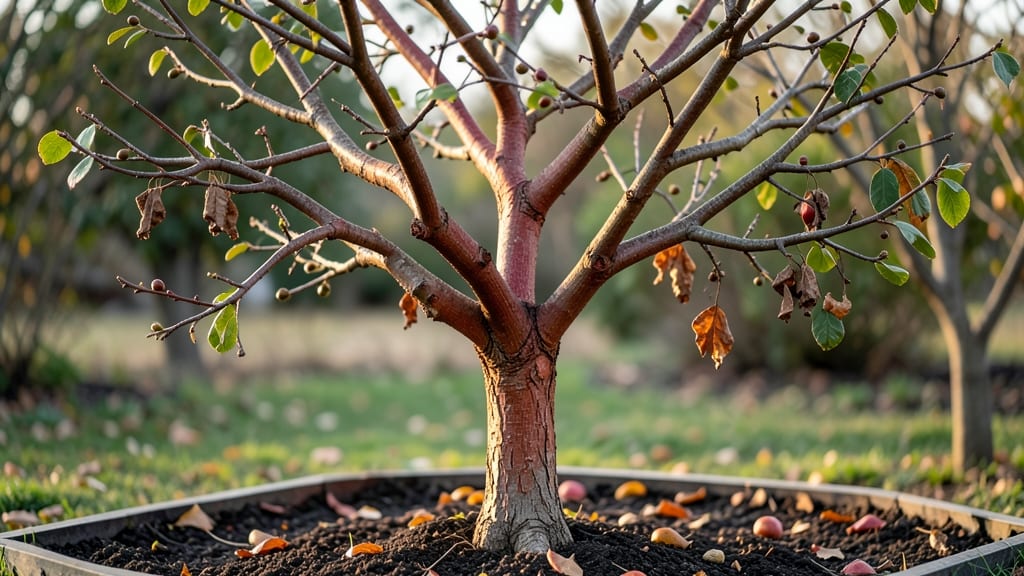
Caring for a pomegranate tree in winter means pruning after dormancy to cut out dead or crossing branches, then shielding it from freezing with mulch or frost cloth—especially for young trees or cold-sensitive varieties.
Winter is the perfect time to refresh your pomegranate tree because the plant is dormant and less stressed. 🌿 Cutting back now helps redirect energy to stronger growth in spring, while proper insulation keeps roots from freezing.
I always use 3-4 inches of mulch around the base and wrap the trunk with burlap for extra protection in harsh climates.
For pruning, focus on removing branches that cross or grow inward—they compete for sunlight and weaken the tree. Use clean, sharp pruners to make angled cuts just above outward-facing buds. This technique encourages an open canopy, which improves airflow and fruit production next season.
💡 In This Article
- When and How to Prune a Pomegranate Tree in Winter
- Protecting Pomegranate Trees from Winter Damage
When and how to prune a pomegranate tree in winter
Winter pruning for pomegranate trees happens during their dormant period, typically between late January and early March in most climates. This timing ensures you cut back before the tree breaks dormancy and new growth begins.
The key is to prune after the worst cold snaps have passed but before buds swell—usually when daytime temperatures consistently stay above 40°F. Pruning too early risks exposing fresh cuts to freezing, while waiting too long can stress the tree as it prepares for spring growth.
There are two main pruning techniques: thinning cuts and heading cuts. Thinning cuts remove entire branches at their base, which improves airflow and sunlight penetration to the center of the tree. Heading cuts shorten branches by cutting back to an outward-facing bud, which encourages bushier growth.
For pomegranates, I recommend a 20-30% reduction in total canopy volume—never more than that—to avoid over-stressing the plant. Use sharp bypass pruners to make clean cuts at a 45-degree angle just above a bud or branch collar.
The tools you use make a big difference. A sterilized pruning saw handles thicker branches, while hand pruners work for smaller limbs. Always sanitize your tools with rubbing alcohol between cuts to prevent spreading fungal diseases like anthracnose, which can infect fresh wounds.
After pruning, remove all debris from the area to reduce pest habitats. The goal is to create an open, vase-shaped canopy that maximizes sunlight exposure for next year's fruit production.
What most people don't realize is that pomegranate trees respond best to gradual pruning over time. A young tree (under 3 years) needs minimal shaping—just removing dead or diseased wood. Mature trees benefit from more aggressive pruning every 2-3 years to maintain vigor.
The tree's natural growth habit is upright with spreading branches, so avoid heavy topping cuts that can lead to weak, water-sprout growth. Instead, focus on removing branches that grow inward or downward, as these rarely produce fruit and compete with healthier branches.
Here's a quick visual guide for identifying branches to remove:
- Dead or diseased branches: Look for dry, brittle wood or signs of fungal growth (black spots, mold)
- Crossing branches: These rub against each other, creating wounds that invite pests
- Water sprouts: Fast-growing, vertical shoots that rarely bear fruit
- Suckers: Shoots growing from the base or roots that divert energy from the main tree
After pruning, the tree will redirect its energy to the remaining branches, resulting in stronger growth and more abundant fruit next season. Just remember: patience is key—don't rush the process, and always prioritize the tree's long-term health over immediate aesthetics. 🌟