
Trees
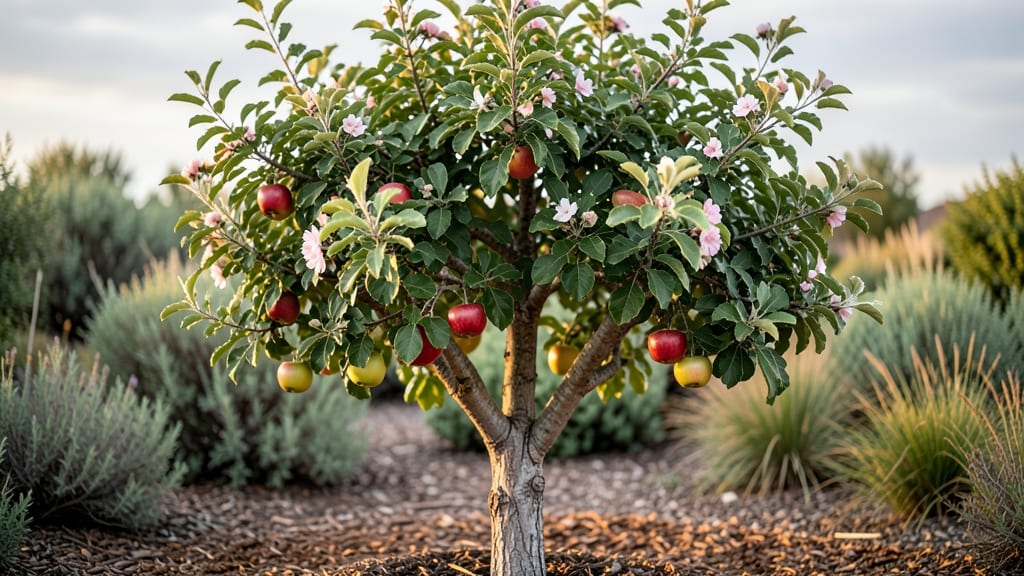
For growing apple trees in Zone 9, choose cold-hardy varieties like Anna, Dorsett Golden, or Pixie Crunch, which thrive in warmer climates and produce sweet, disease-resistant fruit with proper winter chilling and summer care.
Zone 9's warmer winters mean traditional apple trees struggle without enough chilling hours (below 45°F), but these specialized varieties adapt beautifully. 🍎 The key is selecting trees bred for heat tolerance—like Anna, which produces crisp, red apples with minimal care—or Pixie Crunch, a dwarf option perfect for small spaces.
These cultivars also resist common fungal diseases that plague standard varieties in humid climates.
Beyond variety selection, proper care makes all the difference. Plant in well-draining soil with afternoon shade during peak summer months to prevent stress. I've found that deep watering twice weekly during dry spells keeps roots healthy, while mulching with wood chips helps regulate soil temperature.
Pruning in late winter removes dead wood while encouraging airflow—critical for preventing apple scab in Zone 9's damp summers.
💡 In This Article
- Why Zone 9 Demands Specialized Apple Tree Varieties
- Planting and Caring for Apple Trees in Hot Climates
Why Zone 9 demands specialized apple tree varieties
Zone 9's warmer winters create a critical challenge for apple trees: most commercial varieties need 300-1,000 chilling hours below 45°F to set fruit properly. But Zone 9 typically only provides 100-300 chilling hours, leaving standard trees like Fuji or Gala struggling to produce.
Specialized Zone 9 varieties, however, have been bred to thrive with as few as 200-400 chilling hours, thanks to genetic adaptations that trigger flowering at lower chilling thresholds.
The science behind this involves a process called endodormancy—a deep rest period where trees require cold exposure to break dormancy. Traditional varieties rely heavily on prolonged cold, while Zone 9 apples like Anna or Dorsett Golden have shorter endodormancy cycles.
For example, Anna apples can complete their chilling requirement in just 250 hours, allowing them to flower and fruit reliably even in mild winters. The trade-off? These varieties often have shorter growing seasons and may produce smaller fruit clusters compared to their cold-climate counterparts.
Heat tolerance is another key factor. Zone 9's summer temperatures can exceed 95°F for weeks, stressing trees that aren't adapted. Specialized varieties develop thicker, waxier leaf cuticles that reduce water loss and have deeper root systems to access moisture.
Dorsett Golden, for instance, maintains vibrant green foliage even under 100°F+ conditions, while standard varieties often show leaf scorch or wilting. This adaptation isn't just about survival—it directly impacts fruit quality, as heat-stressed trees produce smaller, less flavorful apples.
Disease resistance plays a crucial role too. Zone 9's humid summers create perfect conditions for fungal diseases like apple scab and powdery mildew, which thrive in temperatures between 70-85°F. Specialized varieties have been bred with natural resistance to these pathogens.
Anna apples, for example, develop fewer scab lesions than standard varieties when exposed to identical fungal spores. This resistance reduces the need for chemical fungicides, making these trees more sustainable and lower-maintenance for home growers.
Consider the sensory differences too: Zone 9 apples often develop more intense sweetness and aromatic compounds under their adapted growing conditions. Pixie Crunch, a dwarf variety, produces apples with a crisp texture and honey-like flavor that develops fully in Zone 9's warm climate.
The trade-off? These apples typically have shorter storage lives—best enjoyed fresh within 2-3 weeks of harvest rather than lasting months like storage varieties.
What most gardeners don't realize is how these adaptations affect pollination. Zone 9 varieties often require cross-pollination with other compatible varieties planted within 50 feet to ensure fruit set.
Anna, for example, needs a pollinator like Dorsett Golden nearby, while Pixie Crunch can self-pollinate but produces better yields with a partner. This spatial planning becomes particularly important in small urban gardens where space is limited.