
Propagation
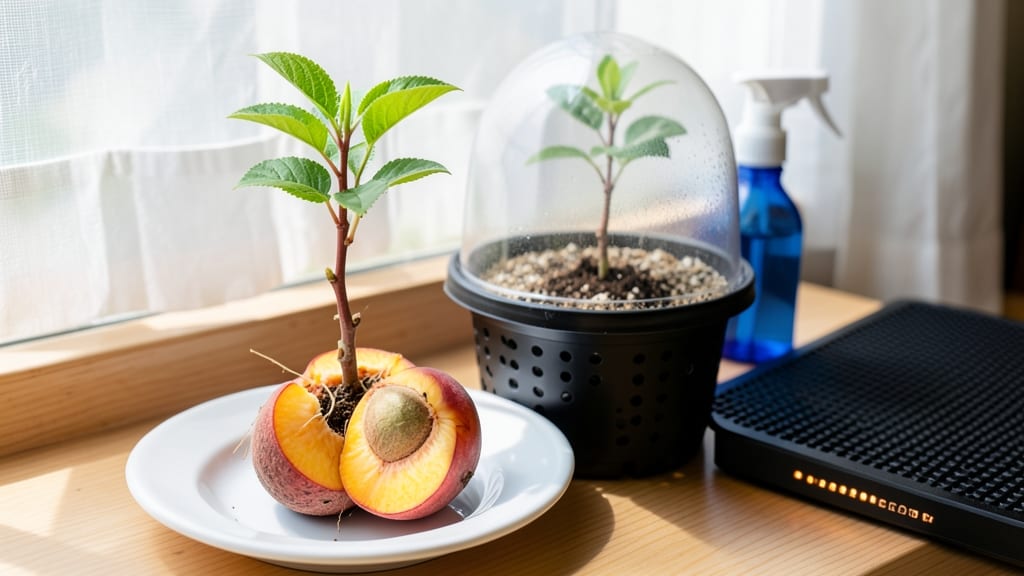
You can start a peach tree from a peach pit, but success depends on proper cold stratification for 60-90 days, planting in well-draining soil, and patience—few pits sprout, and seed-grown trees rarely produce fruit identical to the parent.
Starting a peach tree from seed is a rewarding but unpredictable process.
The key challenge lies in mimicking nature's winter dormancy through cold stratification, where pits must experience freezing temperatures before planting. 🌱 Unlike commercial peach trees, seed-grown varieties may take 5-10 years to bear fruit—and even then, the flavor and characteristics often differ from the original tree.
I recommend trying this method if you're patient and enjoy gardening experiments, but don't expect reliable fruit production.
For best results, collect fresh pits from organic peaches (avoid treated ones), clean them thoroughly, and store them in a damp paper towel inside a sealed bag in your fridge for the stratification period.
Once sprouted, transplant carefully into nutrient-rich soil with full sun exposure. Remember, only about 10-20% of pits will successfully germinate under ideal conditions.
💡 In This Article
- Peach Pit Germination Process Explained
- Growing Peach Trees from Seed: Success Tips and Expectations
Peach pit germination process explained
Peach pits enter a natural dormancy period that mimics winter conditions, and breaking this dormancy through cold stratification is crucial for germination. The process involves exposing the pit to 32-40°F temperatures for 60-90 days to simulate the chilling period peach trees experience in nature.
Without this step, the pit remains dormant—even if planted in ideal soil—because the embryo inside hasn’t received the hormonal signal to grow. Think of it like waking a hibernating bear: the cold period prepares the seed for spring growth.
The stratification process works because cold temperatures break down growth inhibitors in the pit while allowing moisture to penetrate the hard outer shell.
You’ll need to place the pits in a damp paper towel inside a sealed plastic bag, then store them in your refrigerator’s crisper drawer (the coldest section without freezing). Keep the towel 80-90% moist—not soggy—to prevent mold while allowing oxygen exchange.
Some gardeners add a 1% hydrogen peroxide solution to the water to inhibit fungal growth, which is especially helpful if your kitchen isn’t perfectly sterile.
Not all pits will respond equally. Fresh pits from organic peaches have the highest viability, while older or commercially treated pits often fail. The germination rate hovers around 10-20% even under perfect conditions, which is why gardeners often plant multiple pits.
Once stratification completes, you’ll see a tiny white root emerge first—this is your cue that the seed is ready for planting. The root’s appearance marks the transition from dormancy to active growth, triggered by the cold-induced hormonal changes inside the pit.
Temperature fluctuations during stratification matter more than absolute consistency. Peach pits evolved in regions with seasonal temperature swings, so a 5-10°F daily variation within the cold range actually improves success rates. This mimics natural winter conditions where temperatures dip and recover.
Avoid placing pits near the fridge door where heat cycles occur, as these abrupt changes can stress the seed. The ideal location is where your fridge maintains steady cold without mechanical heat sources nearby.
What most people overlook is the pit’s internal structure. The embryo sits on one side of the pit’s hard shell, and proper orientation during stratification matters.
Place the pit with the pointy end down (where the stem was attached) and the flat side up—this position aligns with how the seed would rest in soil. When you see the first root emerge, it’ll grow downward naturally, following gravity’s pull.
This orientation also helps prevent the seed from absorbing too much moisture too quickly, which can cause rot before germination.
After stratification, the real test begins: planting. The sprouted pit must transition from controlled fridge conditions to outdoor soil without shock. Harden off the seedling by gradually exposing it to cooler temperatures over 7-10 days before transplanting.
This acclimation period prevents the delicate root from suffering temperature trauma. The first leaves will appear yellowish—this is normal as the seedling adjusts its photosynthesis machinery to outdoor light conditions.